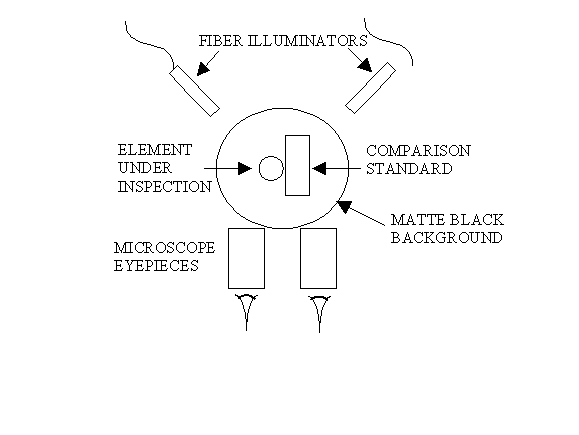
Figure 5a Stereo Microscope Inspection Plan View
Draft Addendum to BSR/OEOSC OP1.002 XXX
Microscope Assisted Inspection Methods
Sam Richman and Trey Turner, REO
May 11, 2007
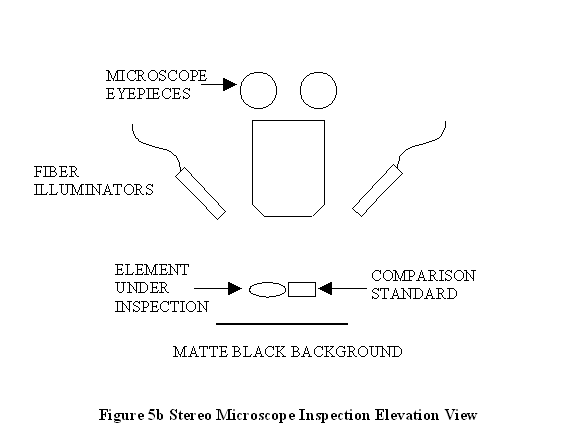
3.7.2.4 Stereo Microscope Inspection (See Figures 5a and 5b)
3.7.2.4.1 Equipment. This method requires a stereo microscope, two fiber optic illuminators with 20° full cone angle beams, 150 W total power light source, and a matte black background material.
3.7.2.4.2 Inspection Technique. Imperfections are visually judged using a side-by-side comparison of the Comparison Standard and the element under inspection. The element being inspected and the Comparison Standard shall be held so that they are approximately in the same focal plane beneath the microscope and viewed against the matte-black background. The fiber optic illuminators are positioned such that they illuminate the element and Comparison standard at 45° angle of incidence. The angle between the two illuminators is 90°. The element may be rotated and/or tilted to insure maximum visibility of the imperfections. The element and Comparison Standard may be alternately placed in the center of the field of view of the microscope. Imperfections are observed by light scattered from the surface. This method may be used for inspection of any uncoated, coated, or reflective optic.
3.7.2.4.1 Equipment. This method requires a compound microscope with dark field illumination and a calibrated reticle in the eyepiece.
3.7.2.4.2 Inspection Technique. The size of an imperfection is measured by positioning it within the appropriate feature in the calibrated reticle. The width of a scratch is measured by aligning it against a linear scale. The diameter of a dig is measured by placing it within the correct size circle. This method may be used for inspection of any uncoated, coated, or reflective optic.