
Task Force for the development of a US standard on surface form and wavefront
Summary from October 7
th
Meeting:
The task force determined that a purpose statement should be created prior the formation
of a scope statement.
The task force will determine what the purpose of BSR/OEOSC OP1.005 will be.
Purpose Statement:
The Wavefront draft minutes from the meeting on 10-8-06 contains a list that was created
to define the purpose of the two US draft standards, OP1.004 and OP1.005
I have summarized the list to provide a starting point for the meeting in San Jose on
1/20/07. My interest is to achieve a unanimous consensus for the purpose of the US
standard, then begin the definition of scope for the standards.
Proposed Purpose Statement (Draft 1):
BSR/OEOSC OP1.004
Create a concise and unambiguous statement of requirements for a US standard
to define the
limits of
surface
texture and mid-spatial frequency rippleand
wavefront errors in terms of a statistical framework
. This
standard
canwill be
offered as
a replacement to theserve as a stand-alone US standard and/or possibly replace the
existing ISO 10110-8, ISO 14999 1 thru 5.
The standard should provide optical engineers, lens designers and all persons
creating specifying surface texture
tolerances with a standardized means of stating
and
communicating requirements of optical surfaces and
propagating
wavefronts to
persons
ofin
manufacturing, assembling, testing, selling and buying.
The standard should contain notation clearly specifying measurement method
requirements as well as use fundamental, traceable, scientific units.
The proposed US draft standard will be limited in scope to contain
accepted
practices and nomenclature for achieving a unified "industry standard" that will
be widely accepted and used.
BSR/OEOSC OP1.005
Create a concise and unambiguous statement of requirements for a US standard
to define the limits of surface form, reflective wavefront, and transmissive
wavefront.Create a concise and unambiguous statement of requirements for a US
standard to define the surface and wavefront errors in terms of a deterministic framework.
This standard can serve as an alternative to ISO 10110-5, -14, ISO 14999
-
1 thru
-
5.
January 17, 2007 11:04:01 AM
1 of 3
purpose definition, 1-17-07.odt
The standard should provide optical engineers, lens designers and all persons
creating surface form and wavefrontspecifying
tolerances with a standardized
means of
stating and communicating requirements of optical surfaces
andand
propagating
wavefronts to persons
of in
manufacturing, assembling, testing,
selling and buying.
The standard should contain notation clearly specifying measurement method
requirements as well as use fundamental, traceable, scientific units.
The proposed US draft standard will be limited in scope to contain
accepted
practices and nomenclature for achieving a unified "industry standard" that will
be widely accepted and used.
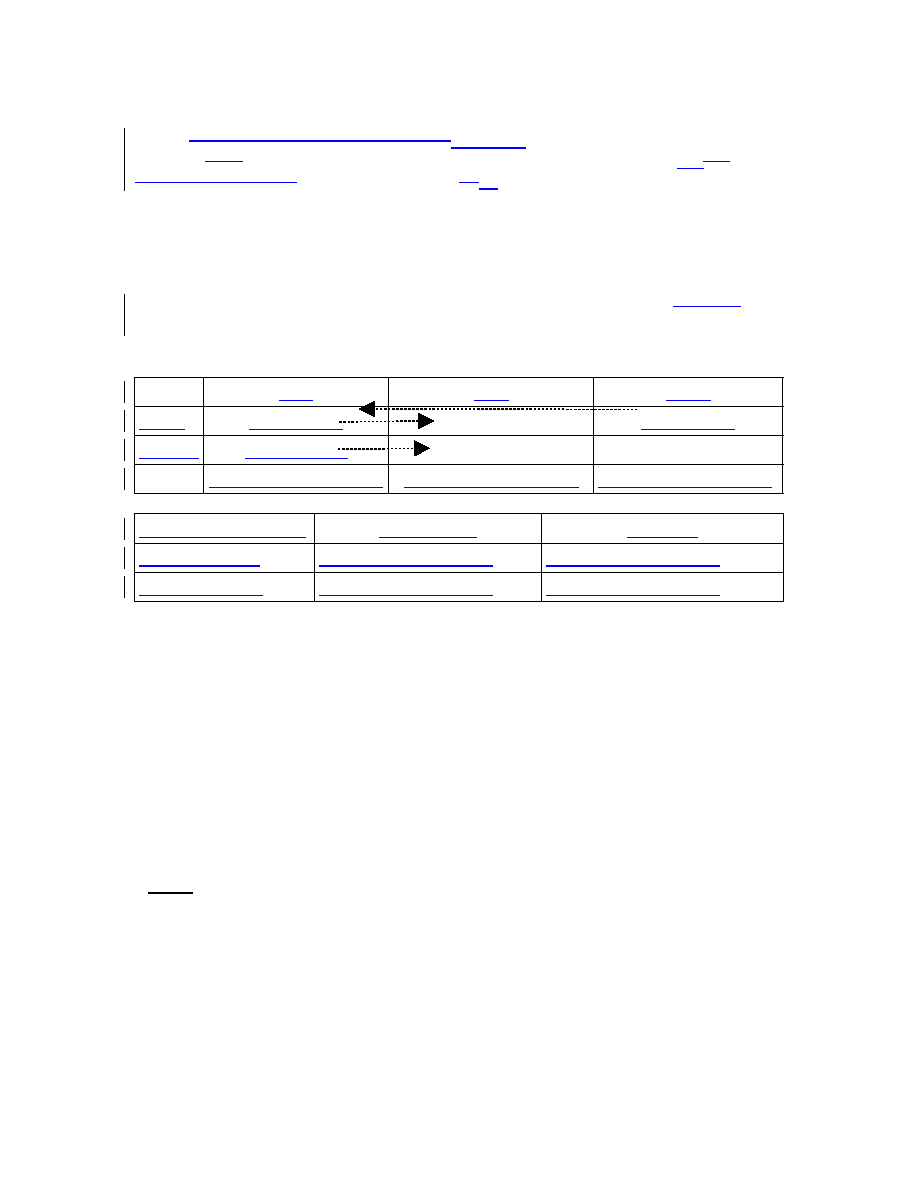
Low
MID
HIGH
SURF
ISO 10110-5
ISO 10110-8
TRANS
ISO 10110-14
ANSI/OEOSC OP1.005 ANSI/OEOSC OP1.004 ANSI/OEOSC OP1.004
Notation/Measurement
Deterministic
Statistical
Physical Surface
ANSI/OEOSC OP1.005
ANSI/OEOSC OP1.004
Phase Wavefront
ANSI/OEOSC OP1.005
ANSI/OEOSC OP1.004
Scope Definition:
I have attached the scope statements from ISO 10110-5; -14 as well as ISO 14999-4.2
These scope statements can serve as a starting point for our scope definition which will
also include adherence to our purpose state (once agreed upon).
10110-5
Surface Form Tolerances
Scope
ISO 10110 specifies the presentation of design and functional requirements for optical
elements and systems in technical drawings used for manufacturing and inspection.
This part of ISO 10110 specifies rules for indicating the tolerance for surface form.
Note 1:
The terminology of interferometry is used for the specification of tolerances, and in particular,
for the units in which the tolerances are to be specifies; however, this does not stipulate that only
January 17, 2007 11:04:01 AM
2 of 3
purpose definition, 1-17-07.odt

interferometric methods may be used for the actual testing of optical parts. Other, non-interferometric
methods may be used if the results are converted to the units specified here.
This part of ISO 10110 applies to surfaces of both spherical and aspheric form.
Note 2:
ISO 10110-12 allows the surface form tolerance for aspheric surfaces to be specified without
reference to this part of ISO 10110.
10110-14
Wavefront Deformation Tolerance
Scope
International Standard ISO 10110 applies to the presentation of design and functional
requirements for optical elements and assemblies in technical drawings used for
manufacturing and inspection.
This part of ISO 10110 gives rules for the indication of the allowable deformation of a
wavefront transmitted through - or, in the case of reflective optics, reflected from an
optical element or assembly.
The deformation of the wavefront refers to its departure from the desired shape. The
tilt of the wavefront with respect to a given reference surface is excluded from the
scope of this part of ISO 10110.
There is no requirement that a tolerance for transmitted wavefront deformation be
indicated. If such a tolerance is specified, it does not take precedence over a tolerance
for the surface form according to ISO 10110-5. If tolerances for both the surface form
and the transmitted wavefront deformation are given, they must both be upheld.
ISO/DIS 14999-4.2
Optics and Photonics - Interferometric measurement of optical elements
and optical systems Part 4: Application to the evaluation of tolerances
specified in ISO 10110
Scope:
This international standard applies to the interpretation of interferometric data
relating to the measurement of optical elements.
This part of ISO 14999 gives definitions and rules for determining whether a
test
object is in compliance with specifications made according to ISO 10110-5
"Surface form tolerances" and/or ISO 10110-14 "Wavefront deformation
tolerances".
January 17, 2007 11:04:01 AM
3 of 3
purpose definition, 1-17-07.odt